
Calendar

Parenting is challenging, particularly when you are parenting a child from a hard place. TBRI® Correcting Principles will provide an in-depth look at strategies for correcting behaviors. This multi-disciplinary training is designed to give caregivers, volunteers, and professionals who serve children and families the knowledge and practical skills they need to bring hope and healing.
This multi-disciplinary training is designed to give caregivers, volunteers, and professionals who serve children and families the knowledge and practical skills they need to bring hope and healing. This live, online training has 4 video-conferencing modules, giving participants the opportunity learn in an interactive environment.
Parenting is challenging, particularly when you are parenting a child from a hard place. TBRI ® Empowering Principles will provide an in-depth look at ways to empower your children by meeting their unique physical needs and creating an environment in which they can succeed. This session includes information on sensory processing and practical tools and skills to help children regulate their emotions and behaviors. This multi-disciplinary training is designed to give caregivers, volunteers, and professionals who serve children and families the knowledge and practical skills they need to bring hope and healing.
This multi-disciplinary training is designed to give caregivers, volunteers, and professionals who serve children and families the knowledge and practical skills they need to bring hope and healing. This live, online training has 4 video-conferencing modules, giving participants the opportunity learn in an interactive environment.
TRAINERS: Carrie Norris

APSAC Board Member Darcey Merritt, PhD, MSW, FAPSAC will be leading a conversation about emerging issues and trends.
The Racial Justice Section continues APSAC’s commitment to work towards ending racism and implicit bias in the field of child maltreatment. This mission requires all of our participation, listening closely to others, learning, changing ourselves, and changing our practices. You are invited to share observations and experiences, discuss challenges that we face as child abuse professionals, and provide each other with collegial support.
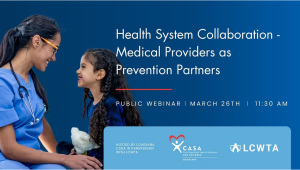
Healthcare professionals are often the first line of defense in identifying vulnerable children. This session emphasizes the importance of integrating child welfare perspectives into pediatric care, home visiting programs, and maternal health. Participants will learn how to conduct sensitive screenings, develop multidisciplinary response teams, and navigate legal and ethical issues in information sharing between medical and social systems.
Learning Objectives:
-
Strengthen provider capacity to detect and respond to risk factors.
-
Embed prevention into pediatric visits and maternal health programs.
-
Navigate HIPAA and information-sharing within ethical boundaries.
2025 – 2026 Louisiana CASA Webinar Series: Strength in Unity
Louisiana CASA is excited to host our fourth webinar series. This year, we are partnering with Louisiana Child Welfare Training Academy (LCWTA) to bring this series to community members across our state. This series equips professionals, child welfare advocates, and community members with the knowledge and collaborative strategies needed to protect children, support families, and prevent child abuse and neglect. Each session emphasizes the importance of cross-sector cooperation, early identification of risk factors, and collective responses that foster safe, stable, and nurturing relationships. By promoting a shared understanding and responsibility among systems—such as education, healthcare, faith-based institutions, family services, and policy leaders—participants will develop the tools and partnerships necessary to create resilient families and communities.
This workshop is for youth and young adults with intellectual and developmental disabilities (IDD) and their families who want to understand how to access services and supports for adult life.
In this interactive session, participants will learn what a Medicaid waiver is, why people may need one, and how waivers help pay for important services that support independent living. We will talk about different Louisiana waivers, how the application process works, what the SUN score means, and who can help along the way.
Participants will also explore how waiver services can support housing, daily living needs, employment goals, and overall health and wellbeing. We will review how to access healthcare services, understand basic insurance concepts, and identify helpful community resources and professional contacts.
This workshop breaks down complex information into simple, practical steps — empowering individuals and families to understand their options, ask the right questions, and take action.
Your future starts with knowing what supports are available to you.
This workshop is for youth and young adults with Intellectual and Developmental Disabilities (IDD) and their families who want to explore options and prepare for independent adult life.
In this interactive session, participants will learn about different housing options such as living with family, supported apartments, or group homes. We will discuss how to think about future living arrangements, what supports may be needed, and who can help with making housing decisions and finding local resources.
Participants will also explore the skills needed to live more independently, including managing daily routines, understanding personal responsibilities, and planning for long-term support. Through guided discussion and activities, learners will practice identifying questions to ask when considering housing choices and how to plan for the future with confidence.
This workshop provides practical information and simple tools to help individuals and families start meaningful conversations about housing, independence, and long-term planning.
Planning today helps create a strong and supported future.
Join the CARE Community Classroom Webinar Series! Presented by the Louisiana Childhood Adversity Resilience Education (LA CARE) Network, this monthly webinar series explores trauma-informed care, childhood adversity, and practical resilience-building strategies.
The Louisiana Childhood Adversity Resilience Education (LA CARE) Network, housed within the Louisiana Department of Health, Office of Public Health, Bureau of Family Health, trains professionals and community members alike to become certified educators on four core trauma-informed modules. Certified volunteer CARE Network Educators deliver these no-cost presentations within their communities and at various local organizations. From January to October, you have the opportunity to watch presentations live via Zoom. Each webinar will introduce the foundations of trauma-informed practice and show you how to apply these insights in your daily life – whether at home, at work, or in your community!
Throughout the year, the CARE Community Classroom series will rotate through all four core modules, giving you a well-rounded understanding of how to foster resilience and support healing in children who have experienced adversity and/or trauma. Below are the dates for each module

As NPEN celebrates 30 years of advancing science-based parenting education, this virtual conference explores innovative, practical ways parenting educators can support parents where they live, learn, work, and gather. Attendees will discover new approaches, tools, and strategies to use in their parenting education programming to keep parenting education relevant, accessible, and impactful in today’s evolving world.
A two-day interactive workshop in suicide first aid. The LivingWorks ASIST program teaches participants to recognize when someone may have thoughts of suicide and work with them to create a plan that will support their immediate safety.
SaveCenla is fully funded in Central Louisiana and available statewide. They welcome requests from law enforcement, educators, high school students 16+ y/o, medical and mental health professionals, and organizations of all kinds.
To schedule a training, contact Angela Dixon: 337-519-1888
Taking Action Against Abuse is a hands-on workshop to help you stay safe. In this training, you will learn: What abuse and neglect mean; signs that someone may be hurting you or not treating you right; how to speak up for yourself; who you can tell if something feels wrong; & what steps to take to get help. We will use simple examples, group activities, and practice exercises to help you understand what to do. You will have time to ask questions and talk about real-life situations. This workshop helps you build confidence, learn your rights, and know how to protect yourself and others. Families, caregivers, and community members are welcome too, so everyone can work together to create safer spaces. You have the right to feel safe. When we learn the signs and take action, we can make positive change. Join us and be part of the solution.
Sharon Delvisco, DSW, has over 30 years of experience supporting, educating, and providing technical assistance to people with disabilities to live and work in the community, their families, their service providers. She has received the Mentorship Award, the Humanitarian Award, and the Education Award from the American Association of Intellectual Disabilities Louisiana Chapter. She also received the Professional Advocate Award from the Advocacy Center in Louisiana. She has served on FPHSA Regional Advisory Committee and State OCDD Advisory Committee. Sharon is the parent of a young man that has IDD. She has lived experience as a person with long-term, persistent, chronic mental illness. Sharon is also a member of the LGBTQIA+ community.
Dr. Rebecca Mandal-Blasio is the Clinical Director in Louisiana for Autism Spectrum Therapies and is a BCBA-D. She leads a team of BCBA Supervisors and Behavior Interventionists serving families in and around the New Orleans, Baton Rouge, and the Florida Parishes areas. A Louisiana native, Dr. Mandal-Blasio received her Ph.D. in psychology from the University of Southern Mississippi and completed her pre-doctoral internship at the Kennedy Krieger Institute of Johns Hopkins School of Medicine as part of the Neurobehavioral Outpatient Unit and Pervasive Developmental Disorders Clinic. She also completed a Postdoctoral Fellowship at the University of North Carolina- Chapel Hill’s Center for Development and Learning where she studied mental health issues in people with developmental disabilities across the lifespan.